
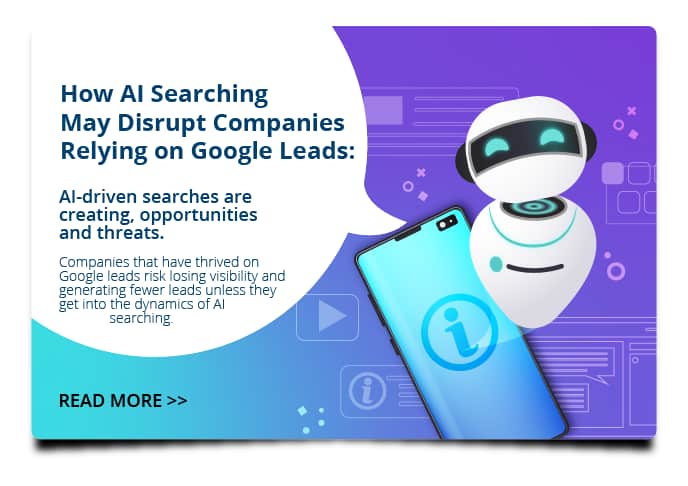
The Power of AI in SEO: How AI Impacts Local Business Rankings and Digital Strategy
Artificial Intelligence (AI) is rapidly reshaping the landscape of search engine optimization (SEO) and changing how search engines like Google and Bing evaluate websites. AI-driven SEO goes beyond traditional ranking factors such as keywords and links, now focusing heavily on user intent, contextual relevance, and user experience. For businesses, especially those targeting local clients, understanding AI’s role in SEO is essential for staying competitive and increasing visibility. This guide delves into the impact of AI on SEO and explores strategies for local businesses to leverage AI for better rankings and growth.
Table of Contents
- How AI Enhances Search Engines and Shapes SEO
- AI and User Experience: Key Factors for Ranking Success
- Semantic Search and Content Relevance in AI-Driven SEO
- Voice Search and AI: Optimizing for Conversational Queries
- AI Ranking Factors for Products and Services
- Personalized Search Results and AI’s Local SEO Impact
- Using AI Tools to Improve Local SEO Strategies
- Conclusion: Positioning for Success in an AI-Powered SEO World
How AI Enhances Search Engines and Shapes SEO
AI-powered search engines, led by innovations like Google’s RankBrain and BERT, are now better at interpreting user intent and delivering relevant results based on context rather than just keywords.
1. RankBrain: Interpreting User Intent for Better Relevance
- RankBrain is Google’s machine-learning AI that decodes user intent, using factors like engagement metrics and content relevance. For instance, when a user searches “best SEO agency in East Rand,” RankBrain analyzes content and user interactions to rank the most relevant results.
2. BERT: Understanding Context in Search Queries
- BERT (Bidirectional Encoder Representations from Transformers) allows Google to understand word context in a way that approximates human language. This helps Google better interpret natural language queries, especially long-tail ones like, “How can small businesses improve SEO rankings in East Rand?”
By leveraging these AI-driven algorithms, search engines now prioritize quality content that aligns with user intent and offers a relevant, valuable experience.
AI and User Experience: Key Factors for Ranking Success
User experience (UX) is increasingly critical in SEO, with AI algorithms closely monitoring user interactions as indicators of content quality.
1. Engagement Metrics
- AI algorithms evaluate metrics such as bounce rate, dwell time, and click-through rate (CTR) to gauge user satisfaction. For a web design or SEO services website, high engagement rates signal that users find the site valuable, which positively impacts rankings.
2. Core Web Vitals and UX Optimization
- Introduced by Google in 2021, Core Web Vitals are a set of metrics focusing on page load speed, interactivity, and visual stability. AI-powered algorithms reward websites that prioritize fast, mobile-optimized, and user-friendly experiences, which makes Core Web Vitals essential for maintaining competitive SEO rankings.
3. Mobile Optimization
- With Google’s mobile-first indexing, sites that perform well on mobile devices receive higher rankings. Ensuring that content, images, and navigation are fully optimized for mobile is key to maximizing SEO results and keeping up with AI’s focus on user-friendly design.
Semantic Search and Content Relevance in AI-Driven SEO
AI-driven SEO now relies heavily on semantic search, prioritizing content that provides comprehensive answers and aligns with user queries.
1. Importance of Contextual Content
- AI tools, including Google’s Natural Language Processing (NLP), seek content that fully addresses user queries rather than relying on keyword density. For example, a business providing SEO services in East Rand should create content that covers relevant aspects like user experience, mobile optimization, and conversion strategies.
2. Using Latent Semantic Indexing (LSI) Keywords
- AI now identifies and values LSI keywords, which are related terms and synonyms that provide context. In a discussion on “SEO for local businesses,” including terms like “local search optimization” and “Google My Business” can boost relevance, as AI interprets the broader topic of local SEO beyond specific keywords.
Voice Search and AI: Optimizing for Conversational Queries
With the rise of voice-activated assistants like Google Assistant and Alexa, voice search is becoming a major driver in AI-enhanced SEO, particularly for local businesses.
1. Targeting Conversational, Long-Tail Keywords
- Voice search queries are often conversational and location-based, like “Where’s the best SEO agency near me?” AI prioritizes direct, question-based results, so optimizing for long-tail keywords and common questions relevant to local customers is essential.
2. Structured Data and Schema Markup for Voice Search
- Adding structured data or schema markup helps AI understand your content more effectively and improves the chances of appearing as a direct answer in voice search results. A clear FAQ section and detailed product or service pages are especially helpful.
3. Emphasizing Local Keywords
- For businesses in the East Rand, including local keywords like “SEO services East Rand” or “web design company in East Rand” helps target local searches and boosts the likelihood of appearing in voice search results tailored to nearby users.
AI Ranking Factors for Products and Services
AI utilizes a combination of factors to rank sites based on their relevance and authority for specific products or services.
1. Content Quality and Relevance
- AI evaluates content quality by examining readability, depth, and the presence of valuable information. Sites offering clear, comprehensive answers are rewarded with higher rankings.
2. User Engagement Signals
- AI measures user interactions with a site, including time spent on pages and bounce rates. Websites that keep users engaged are seen as providing high-quality content, which results in improved rankings.
3. Backlink Quality Over Quantity
- AI prioritizes quality backlinks over quantity. High-quality links from reputable sites are essential, while low-quality, irrelevant backlinks can negatively impact rankings.
4. Local SEO Signals for Local Businesses
- Local businesses benefit from signals like Google My Business profiles, consistent directory listings, and positive local reviews. Optimizing these factors can significantly improve local rankings.
Personalised Search Results and AI’s Local SEO Impact
AI personalizes search results based on a user’s location, search history, and behavior. For instance, someone searching for “SEO services” in Johannesburg will likely see different results than someone searching in another region.
1. Emphasising Local SEO for Geographic Relevance
- Local SEO is critical for small businesses, as AI tailors results to user location. Optimizing for local search means incorporating location-specific keywords, establishing local citations, and maintaining a strong Google My Business profile.
2. Content Customisation Based on User Preferences
- By analyzing behavior and preferences, AI delivers content that resonates with users’ past searches, ensuring that users see results most relevant to their search history and engagement patterns.
Using AI Tools to Improve Local SEO Strategies
AI-driven SEO tools, such as keyword research platforms and content optimization tools, offer businesses new ways to refine their SEO strategies.
1. AI-Powered Keyword Research and Predictive Analytics
- Tools like SEMrush, Ahrefs, and Google’s Keyword Planner provide insights into trending keywords and search volume, enabling businesses to create content that aligns with user demand.
2. Enhanced Content Creation and Optimization
- AI tools can suggest content improvements, identify missing subtopics, and offer suggestions to increase readability and relevance. For example, AI-powered platforms like Clearscope and MarketMuse can analyze existing content and recommend ways to boost quality and relevancy.
3. AI-Driven Customer Engagement with Chatbots
- AI-driven chatbots can improve user engagement by offering instant responses to inquiries. They provide a more interactive user experience, which can improve dwell time and reduce bounce rates, both of which positively influence SEO.
Conclusion: Positioning for Success in an AI-Powered SEO World
The rise of AI in SEO is transforming how websites are ranked and making it essential for local businesses to adapt their strategies to stay competitive. By prioritizing user experience, optimizing for semantic and voice search, and utilizing AI-powered tools, businesses can maintain high visibility and relevancy in search engine results. For companies in the East Rand, a focus on local SEO, quality content, and AI-informed strategies will be essential to stand out, attract more local traffic, and grow a strong digital presence.
As AI continues to evolve, staying updated on these changes and adopting AI-driven SEO best practices will be key to maintaining strong rankings and building an engaging online experience for users.
Contact Web Design East Rand today to learn how our team can help your business stay competitive in an AI-driven SEO landscape!